Thursday, October 28, 2010

Final Chapter

Before I can get to the conclusion of Bastard Tongues there is something i would like to tell you that i found interesting. In the chapter titled "Columbia before Cocaine" it said, "Every dialect feature has geographic boundaries and every dialect is structured, integrated whole; it's just not possible for isolated feature to detach themselves from their home and congregate in  single place" (Bickerton 52). From my perspective, this quote implies that even if a group of people are close in area they may speak the same language but a different dialect because of their geographic boundaries. Local speech contained features found in no other Latin American dialect; however, substandard it might be regraded. For example,
Mailo mi Kele nu is husband my want not. {Latin Dialect}
or
"My husband doesn't want [ it, understood]". { Palenquero}
There is not a significant difference of the sentence, the only difference is the pronunciation.
Mi Marido nolo quiere is my husband not it wants.

In Palenquero put the possessive adjective after its noun instead of before like both English and Spanish. Also the negative marker at the end of the sentence is at the middle.

The final chapter the author speak of the ideology of home sign, communication deaf people use. The author stress the fact that deaf does not make a person dumb. It is the simple understanding that the use of sign is a way of communication like creolese.

The author talks about the ASL ( American Sign Language), a full human language that is used for deaf people and was developed by the deaf ( 232).

Monday, October 18, 2010

"Eureka"!

              According to Oxford Dictionary the word “Eureka” is a cry of joy on discovering something. To Linguistics “Eureka” is derived from the Ancient Greek verb heuriskein meaning “to find”. In other words in English it means “I have found it”. Eureka is a Coinage because there is a vacuum by that name. I also think this can be a form of eponyms. To add, Eureka is also borrowed from Ancient Greek. I choose this word because my older cousin name is Eureka; I presume when her mom was giving birth she cried out of joy discovering that pregnancy was not a joke. I guess that may be a reason why my aunt only has one child named Eureka.
      The exclamation "Eureka"! is said by a famous Ancient Greek scholar named Archimedes, who said this expression while stepping out of a bath noticing that the water level rose.The interesting part of finding out about the word Eureka is, it is Town and administrative headquarters of Woodford County, north-central Illinois; it is located 27 km/17 mi east of Peoria. It is a trade and distribution centre for locally produced pumpkins and livestock. It is also home to Eureka College (1855).Eureka is also an alternative name for the copper-nickel alloy constantan, which is used in electrical equipment in chemistry.
See full size image


"Eureka." The Hutchinson Unabridged Encyclopedia with Atlas and Weather guide. Abington: Helicon, 2009. Credo Reference. Web. 18 October 2010.
"eureka." The Hutchinson Unabridged Encyclopedia with Atlas and Weather guide. Abington: Helicon, 2009. Credo Reference. Web. 18 October 2010.


Thursday, October 14, 2010

Option1

       This book Bastard Tongues a story expressed by Derek Bickerton , the author, who spent more than thirty years his time researching language from different areas including Guyana, Mauritius, Hawaii, Suriname and many more. The overall idea of this work is to explain what language is, how it transport from generation and how it is used. The objective of this book is not only to focus on the different languages but on language within a language. In other words, creoles or dialect creoles and dialect are languages that have evolved from the mixture of two or more languages. In Guyana the native speaker speak English; however in a dialect. Same as in Suriname, they speak a mixture of English and Portuguese Creole. Do not get confused with pidgin because creoles have a larger vocabulary and grammar. Bickerton express first hand accounts on how he was able to analyze the different languages it is as if he is a field work linguist who goes out to get answers for his hypothesis.
                   
        When I seen the title Bastard Tongue I knew in my mind this was a book for me. When I read a the table of contents on Amazon I noticed that one of the title of the chapter is Grappling with Guyana. I thought to myself how cool can it be to read about language from the perspective of where I was born. I shared a great connection with the author and his experience. From the way he was able to put his first hand account in book form is amazing. I thought it took a great about of skills to write about a different dialect not familiar to you.the thing i dislike about this book is that Bickerton waits till the end of a chapter to get his ideology across instead of spreading it throught the chapter.All in all I enjoy reading this book because it remind me of back home because of the language Bickerton uses.

Saturday, October 9, 2010

"Gappling with Guyana"

2/5 of Bastard Tongues. I must say I enjoyed the second and third chapter not only because it was focus on Guyana but because the author explain in-dept of his experience and examination on Guyanese or Creoles. I admire the author's ability to captivate my attention as the reader. In addition, there were no restriction on how he told his story, I was able to visualize every single detail that was given.

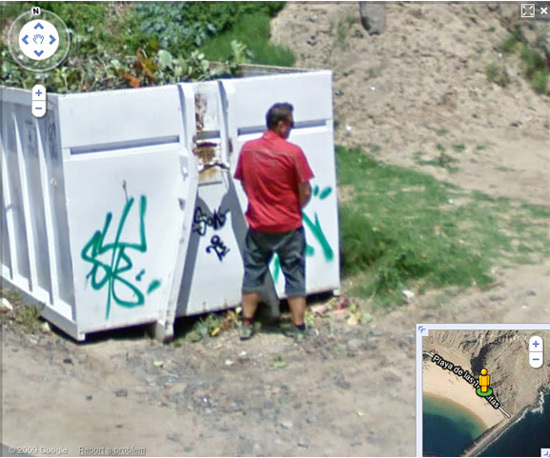
For instance, the author and a few friends went to the bar and after a couple of drinks they realized they had to use the restroom, being that the bar bathroom was disgusting, they decided to head to the grass. As they handled their business a black laborer drove by and shouted. "Look a red man a piss a road corner"!(DB 18). This statement was made by a Guyanese. You learn a lot about both Guyanese society and its language from that one sentence.

           The expression "red man" according to the author refers to Native Americans in America. On the other hand in Guyana and the Caribbean generally their is only three categories that is black, white and red. Basically anything between " stove top black and pillow white is considered to be red (DB18).

To explain the statement "look a red man a piss a road corner"; firstly, the road corner does not mean literally the corner of the road because the author and his friends were in the grass no where near a road. The coner of the road means the side of the road instead. The guyanese way of communicating simply shows that language has change and has transform into different dialects, for example Guyanese just speak broken English.


See full size image

Saturday, October 2, 2010

SAY CLEVELYN!!!!!

If a linguist were to pronounce my name Clevelyn using phonetic symbols it would sound like [klivəlɪn]. Where the

first character "c" will sound like the sound "k" which is velar stop and voiceless. The second letter "L" would be

pronounced as normal. The third letter "e" will be pronounces as "i", followed by the sound "v".Then you will

pronounce the second "e" as "ə" followed by another "l". The "y" in my name as "ɪ". Lastly, the letter "n".


[klivəlɪn]


For a non-linguist to pronounce my name "Clevelyn" they would start off by putting the tip of their tongue to the roof

of their mouth to make the "Cl" or "KL" sound demonstrated in figure 1. Then close their teeth to make the "e"

sound like in "me" shown in figure 2. Then they should put their top teeth on their bottom lip to make the "v" sound.

The second "e" is silent like the "e" in above. The  letters "lyn" is pronounced by using your tongue and upper area of

the mouth than releasing the sound so it flows.

[CL-EVE-LYN]
  

Fig1. "CL" or "KL"
                                     

Fig2."eeeeee"

  
Fig3."V"


Fig4."LY"


Fig5."nuah"